Columbia University boasts proud baseball tradition
Columbia University predates the United States of America
Columbia University ranks among the nation’s oldest and most respected academic institutions. Originally named King’s College, the school opened in 1754, twelve years before America’s Declaration of Independence.
The university founded in honor England’s King George II also has a rich baseball history. The sport became the first varsity offering at the school in 1868, three years after the conclusion of the US Civil War. Baseball as a professional endeavor had yet to be formed. Today, the Columbia baseball program remains one of the oldest in continuous operation.
Its first big leaguer John Ward resides in Cooperstown
John Montgomery Ward linked Columbia to early professional baseball. He debuted in 1878 and led the league with a 1.51 ERA. The next year he topped all hurlers with 47 wins and 239 strikeouts. In 1880, his eight shutouts resulted in another league-leading total.
Ward’s prowess was not limited to the mound. He performed at every position except catcher and first base. On the basepaths, he twice led the league in steals, including a career-best 111 in 1887. Across his 17-year career, Ward collected more than 2,000 base hits.
During his eighth major league season, Ward graduated from Columbia Law School. Soon after, he applied his legal training to his sport. Ward led the Brotherhood of Professional Base Ball Players. That group challenged the reserve system that bound players to teams. In 1890, he helped create the Players’ League. His work advanced player control during baseball’s formative years.
His page on the Hall of Fame website kicks off with his opinion strengthened by his time at Columbia Law. “…’Players have been bought, sold and exchanged as though they were sheep instead of American citizens,’ John Montgomery Ward said.
“Throughout his career, Ward fought to broaden players’ rights in the game while fashioning an outstanding record as a pitcher and infielder.”
Eddie Collins and Lou Gehrig were among baseball’s best
A decade after Ward retired, Eddie Collins played quarterback on the Columbia gridiron and shortstop on the Lions diamond. In 1906 school officials ended his amateur career when they discovered him playing semi-professional baseball under the name Eddie Sullivan. Despite the professional work costing him eligibility, Collins remained with Columbia as an undergrad coach.
Collins’ play in college and semi-pro drew attention from Connie Mack and the Philadelphia Athletics. Late in 1906, Eddie played six games for the team.
By 1909, Eddie became a full-fledged star. Only Ty Cobb bested Collins’ .347 average, .415 on-base percentage, and 9.7 WAR. The MVP in 1914, Collins played a quarter-century in the big leagues and finished with 3,311 hits and a .333 career average. In 1939, he earned induction into Cooperstown.
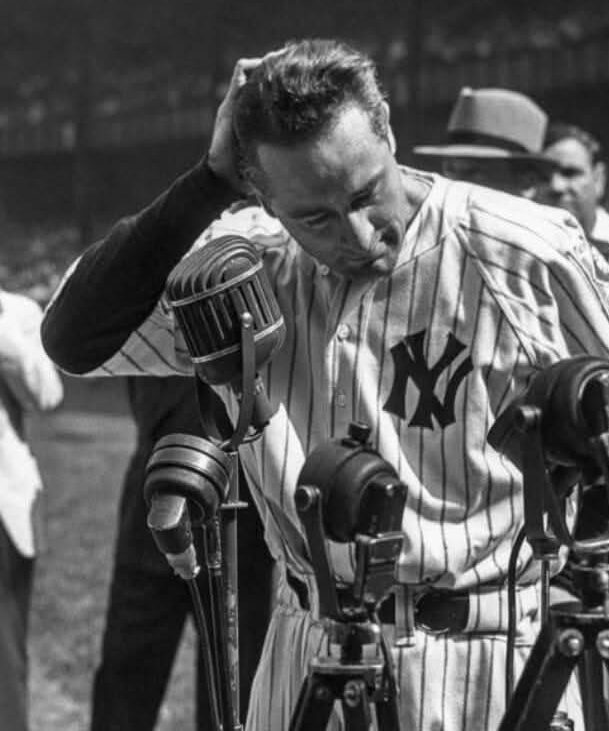
In 1922, Lou Gehrig continued the Lions tradition. After two seasons at the school he left to join the New York Yankees. Would-be Columbia enginner Gehirg claimed the 1935 Triple Crown and two MVPs while leading the Bronx Bombers to six World Series titles
Seventeen years in Pinstripes saw Gehrig slam 493 career home runs. His 1,995 runs batter in was succeeded before him only by 19th-century star Cap Anson and teammate Babe Ruth. Best for remembered for playing in 2,130 consecutive games until bowed by disease that now bear his name, Gehrig slahed .340/.447/.632. His career 179 OPS+ trails only teammate Babe Ruth, Ted Williams, Ocsar Charleston and Barry Bonds all-time.
Like Collins, Columbia Lou was inducted into Cooperstown the year the Hall’s doors first opened.
Baseball’s first televised game featured Columbia vs. Princeton
The same year Collins and Gehrig received their plaques, Columbia baseball made broadcast history. On May 17, 1939, the Lions’ contest against Princeton on W2XBS became the first first televised baseball game. A reported crowd of 5,000 attended the Baker Field as NBC broadcasted the contest to a small New York audience.
Three months later the big leagues followed Columbia baseball’s lead when same W2WXBS cameras next flashed on for baseball for the Dodgers August 26th loss at Ebbets Field. Red Barber was behind the mic for the Brooklyn faithful. Televisioned soon grew the game and revolutioned the way fans knew the players and followed their teams.
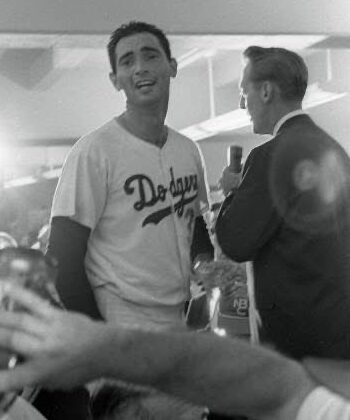
Sandy Koufax celebrated the title with Brooklyn teammates in ’55 and attended architetue class at Columbia later that night
By 1940 seventeen players shared the Lions campus and the heritage as a major leaguer. In the next decade one of baseball’s greatest pitchers also roamed Columbia’s halls. Sandy Koufax took night classes at the Ivy League institution’s school of architeture while pitching for Brooklyn in 1955, his first big league season.
In the World Series, Koufax split time between the bullpen and the Upper West Side campus. When Johnny Podres shut out the Yankees in Game 7, Sandy celebrated with teammates before returning for class that night.
Soon after, the demands of his baseball career pushed Koufax to drop out of the school. His link to Columbia remains a proud chapter for the left-hander and the university.
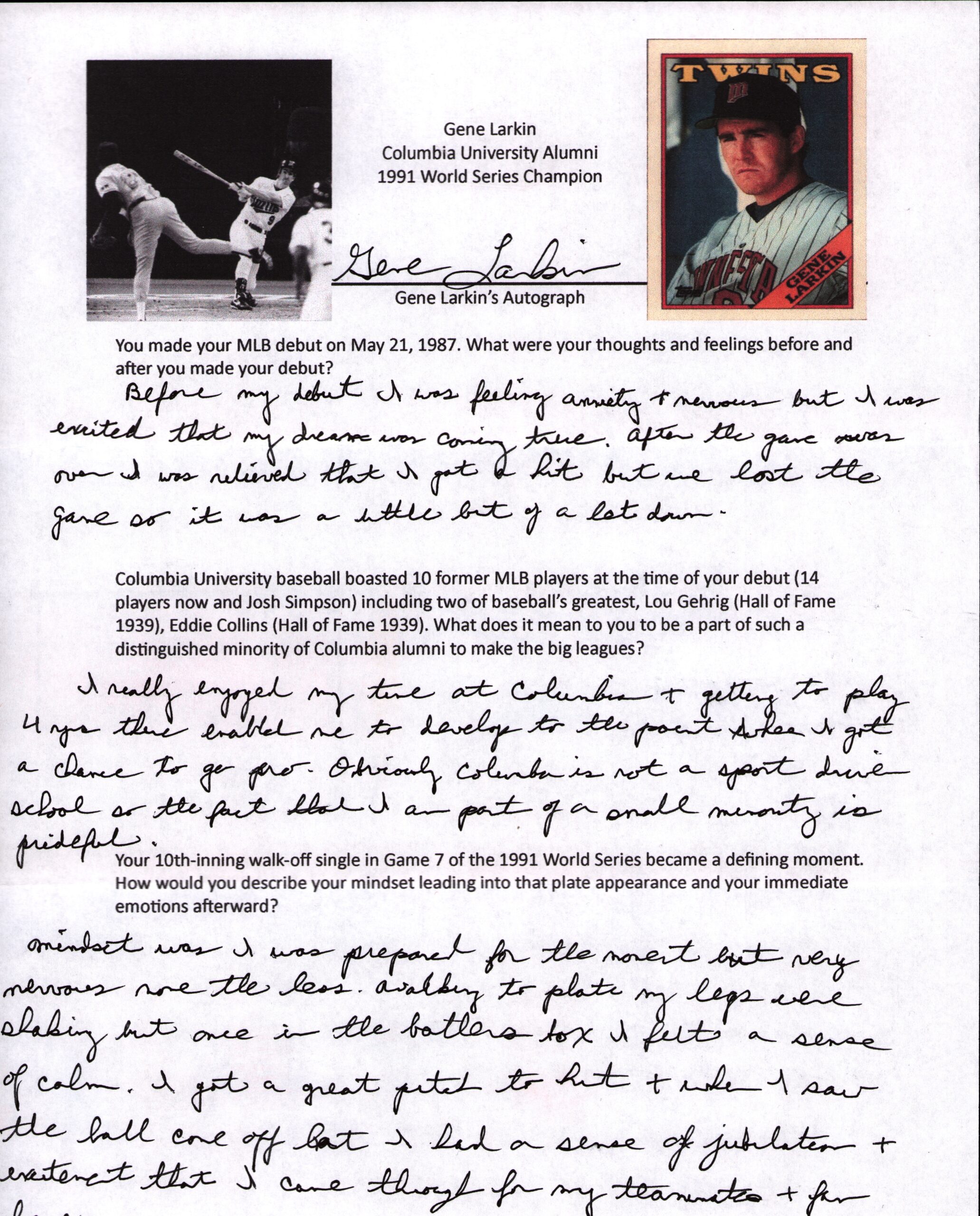
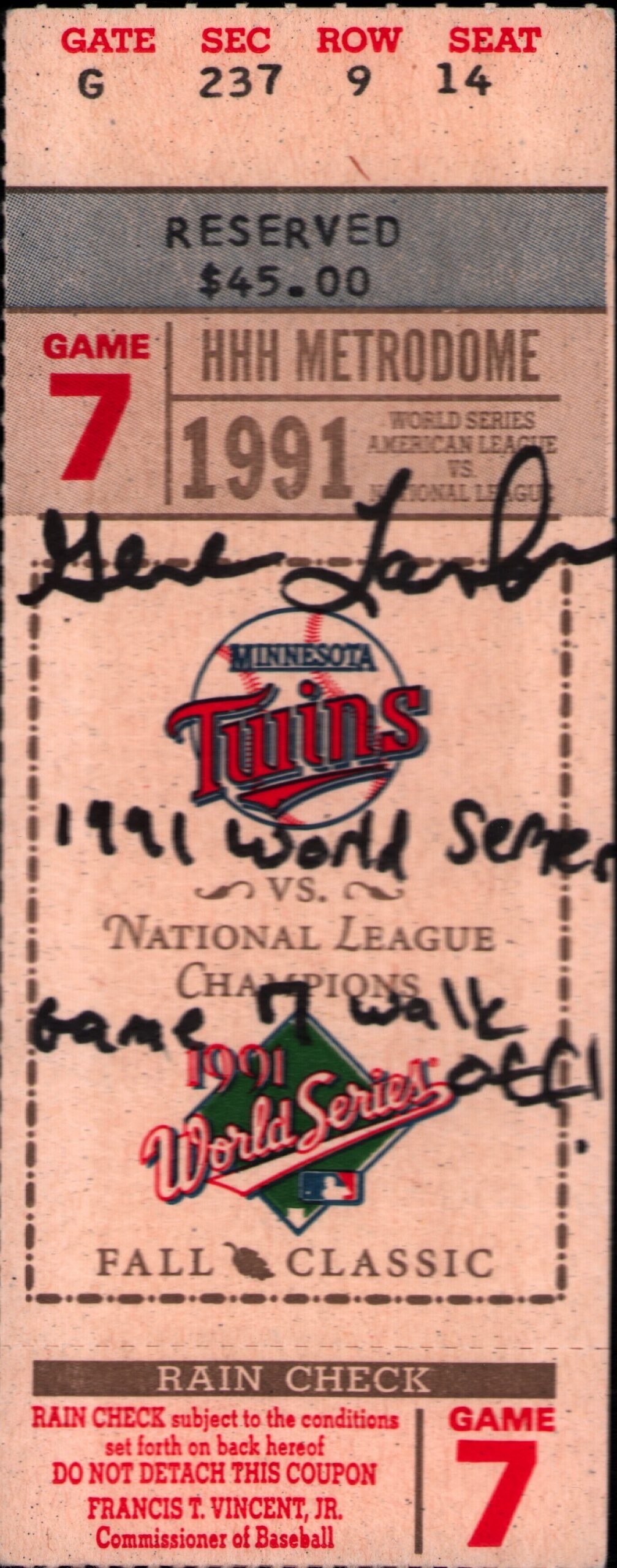
Larkin’s 10th inning Game 7 walk-off hit in the 1991 World Series earned his second ring
The tradition continued through the decades with many seasons to remember. In his 1984 senior campaign Gene Larkin hit .429 with 19 homers and 62 RBI in 40 games for the Lions. He tied or broke thirteen school records before signing with the Twins.
Three years later Minnesota and Larkin were champions of basebll when by grounded the St. Louis Cardinals. In ’91 they stormed baseball’s biggest stage again. This time their foe was the Braves led by Hall of Fame trio John Smoltz, Tom Glavine, and Greg Maddux.
The Twins siezed the first two games. Over the next four days their fortune changed. With three victories in four days, the Braves could end the season with one more win. The Twins stood tall. When they won it won Game 6 in their final at-bat, announcer Jack Buck captured the gravity of the moment. His call of Kirby Puckett’s Game 6 11th-inning walk-off homer is an instant classic: “Into deep left-center…And we’ll see you tomorrow night.”
The Game 7 that tomorrow held proved even better. Minnesota native Jack Morris squared off against Smoltz in a game for the ages. The Cooperstown men went toe-to-toe, matching zeroes through the first 7 innings before the Braves starter gave way to reliever Mike Stanton.
After Morris sat down Atlanta in order in the 9th, Stanton gave up hits to consecutive Minnesota hitters to open the home half. Alejandro Pena came on and wiggled out of the jam. For a second-straight night, the Fall Classic contest would be decided in exta innings.
Morris again authored a 1-2-3 frame in the 10th. In the bottom, Dan Gladden led off with a double to left-center. After Chuck Knoblauch sacrificed Gladden to third, Atlanta skipper Bobby Cox order consecutive intentional passes to Puckett and Kent Hrbek.
With the bases loaded and the Series hanging in the ballance Minnesota manager Tom Kelly called on Columbia University alum Gene Larkin to decide the game. With the outfield playing shallow enough to cut down a runner at the plate, Larkin drove the ball over the head of left-fielder Brian Hunter for a World Series walk-off hit.
The school inducted Larkin into its Athletics Hall of Fame in 2006.
Brett Boretti’s steady hand as head coach extends the tradition; Simpson reaches the bigs
Today, the program continues to shine. Since 2005 Brett Boretti guides Columbia Baseball as head coach. In his first 20 campaigns Boretti’s teams have reached the Ivy League playoffs 11 times and command eight championships. The winningest skipper in the storied program’s history, Boretti’s teams boast 14 wins over nationally-ranked teams and seven NCAA Tournament victories. Both are the most in the history of Ivy League teams.
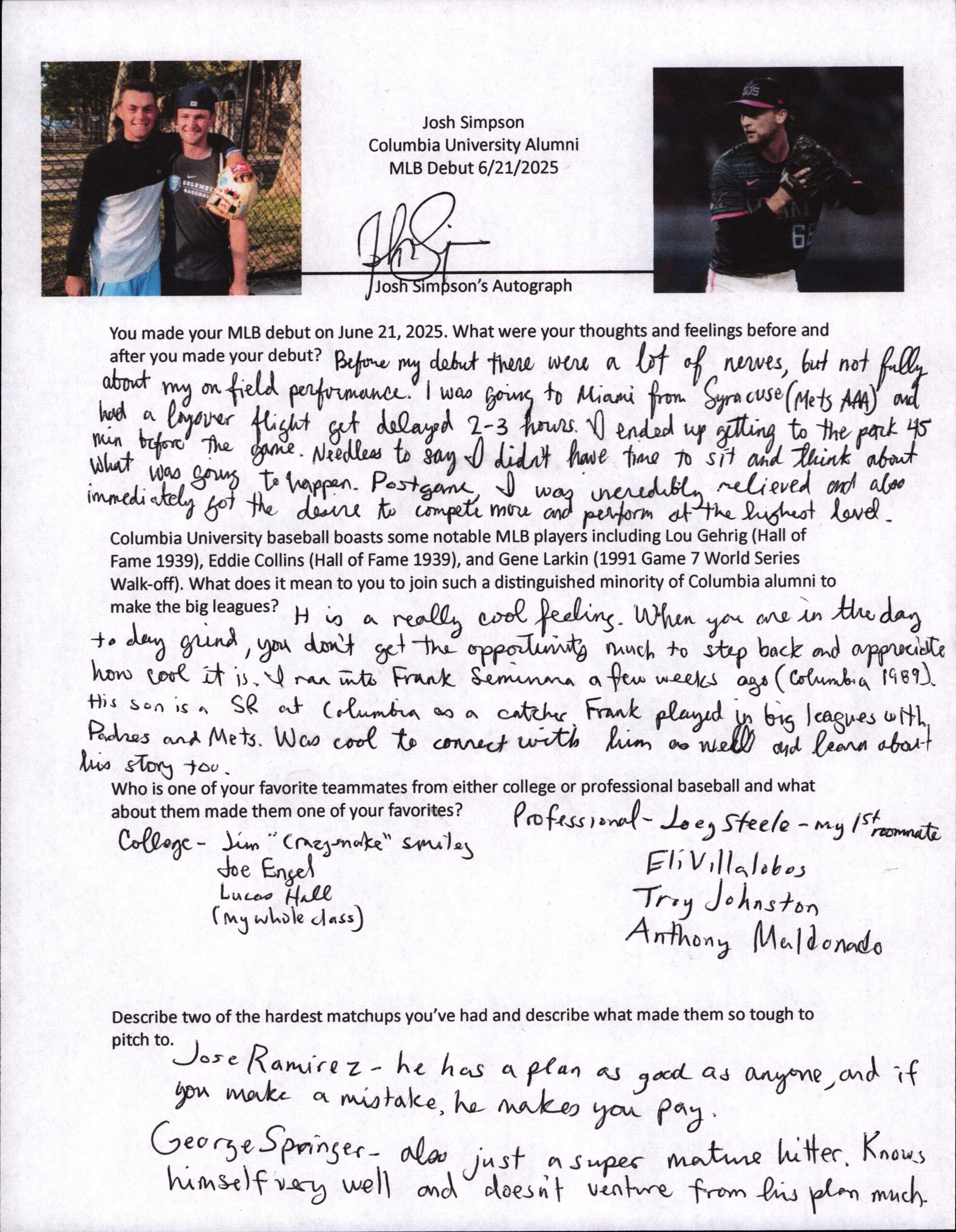
For Boretti, standout left-hander Josh Simpson has an unparallelled of success. The Ivy League Rookie of the Week on March 29, 2016, Josh followed his freshman season as a staff leader. In 2017 no Columbia hurler had more strikeouts. After missing 2018 with injuries, Simpson bounced back in ’19, leading the squad with a 3.06 ERA and 56 Ks. His performance made him an All-Ivy Leauge selection.
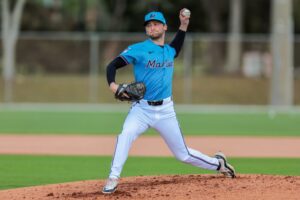
Impressed by his success, the Marlins plucked Simpson in the 32nd round. The southpaw relentlessly worked his way through the minor league system, suiting up for 8 affiliates along the way. On June 21st, 2025 he teached baseball’s highest level and became Boretti’s first big leagueer. In 31 games that year, Simpson posted a 4–2 record with 36 strikeouts in 31 games for the Marlins.
The Common thread is their school
As of the 250th birthday of a country it predates, 23 major leaguer players attended Columbia University. No ever shared the same major league clubhouse. Instead, they shared a common bond of time spent in New York City with the Lions. In return they added to the school’s legaacy by reaching their profession’s highest level.
Ward paved the way. Collins set the standard. Gehrig became the legend. Koufax showed the committment. Larkin walked ’em off to win it all. Today Boretti’s teams add to the tradition while Simpson carries it skyward.
Editor’s note: The author of this story is Jimmy Smiley who played at Columbia under Coach Brett Boretti as a teammate of Josh Simpson. Jimmy can be reached at jbs2253@columbia.edu
Be sure to check out CooperstownExpert.com, the internet’s leading website for the display of museum-quality baseball autographs.