Columbia University boasts proud baseball tradition
Columbia University predates the United States of America
Columbia University ranks among the nation’s oldest and most respected academic institutions. Originally named King’s College, it honored King George II of England.
The school opened in 1754, twelve years before America’s Declaration of Independence. Columbia’s history intersects with baseball and predates the first professional league. Baseball became the first varsity sport at the school. Today, the program remains one of the oldest in continuous operation.
The Lions first took the diamond in 1868, three years after the Civil War ended. Baseball as a professional endeavor had yet to be formed.
Its first big leaguer John Ward resides in Cooperstown
John Montgomery Ward linked Columbia to early professional baseball. He debuted in 1878 and played seventeen seasons in the National League. At eighteen, he entered the majors as a dominant pitcher. That season, he led the league with a 1.51 ERA. The next year, he recorded forty-seven wins and 239 strikeouts to top all hurlers. By 1880, his eight shutouts resulted in another league-leading total.
As a two-way player, Ward showed great versatility. He played every position except catcher and first base. On the basepaths, he twice led the league in steals, including a career-best 111 in 1887. Across his career, he collected more than 2,000 hits.
During his eighth major league season, Ward graduated from Columbia Law School. Soon after, he applied his legal training to baseball. He led the Brotherhood of Professional Base Ball Players. That group challenged the reserve system that bound players to teams. In 1890, he helped create the Players’ League. His work advanced player control during baseball’s formative years.
Voters elected Ward to the Hall of Fame in 1964.
Eddie Collins and Lou Gehrig were among baseball’s best
A decade after Ward retired, Eddie Collins played shortstop on the Columbia diamond and quarterback on its gridiron. In 1906 school officials ended his college career after they discovered him playing semi-professional baseball under the name Eddie Sullivan.
Collins’ play drew attention from Connie Mack and the Philadelphia Athletics. Late in 1906, he played six games for the team. Despite losing eligibility, he remained associated with Columbia.
Over time, Collins built a Hall of Fame career. He hit .333 and recorded 3,311 hits. In 1939, he earned induction into Cooperstown.
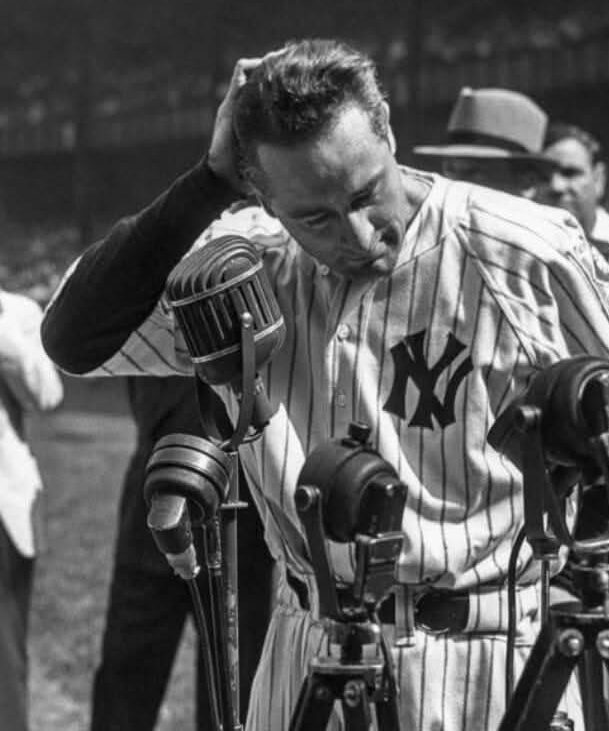
In 1922, Lou Gehrig continued the Columbia tradition. After two seasons at the school he left to join the New York Yankees. Across his career, Gehrig left a lasting mark on baseball. He earned two MVP awards and six World Series rings. Gehrig is best remembered for playing 2,130 consecutive games. Like Collins, Lou was inducted into Cooperstown the year the Hall’s doors first opened.
Baseball’s first televised game featured Columbia vs. Princeton
Beyond the field, Columbia shaped sports broadcasting history. On May 17, 1939, Columbia’s contest against Princeton became the first first televised baseball game. A reported crowd of 5,000 attended the Baker Field as NBC broadcast the game to a small New York audience.
It was a rough TV debut. According to an article on the Baseball Hall of Fame’s website, “W2XBS used a single camera fifty feet from home plate – ‘woefully lacking,’ said The New York Times. One camera at one site ‘does not see the complete field. Baseball by television calls for three or four cameras.’ At least the viewer didn’t suffer long. The 10-inning game took just two hours and 15 minutes.”
Despite the early shortcomings of the new medium, the moment helped launch modern sports media.
Sandy Koufax and Gene Larkin leave their mark
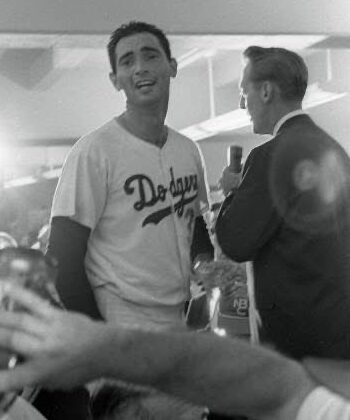
By 1940 seventeen players moved from the Columbia campus to the major leagues. During the 1950s, Sandy Koufax attended the school. Following Game 7 of the 1955 World Series, he rushed back to campus to attend class.
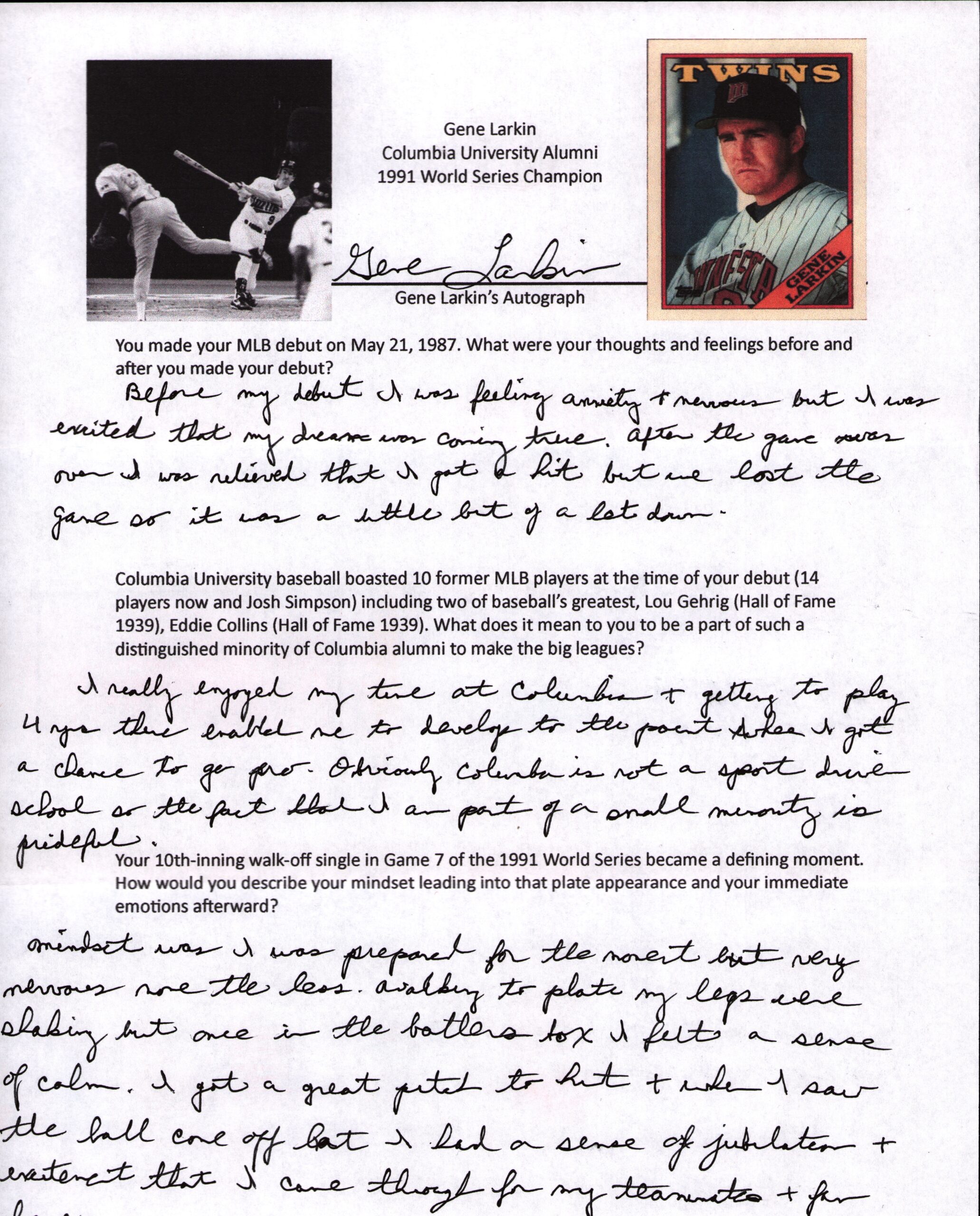
The tradition continued through the decades. In the 1980s, Gene Larkin starred for the Lions. During his senior campaign of 1984, he hit .429, slugging 19 homers with 62 RBI in just 40 games. Lark tied or broke thirteen school records.
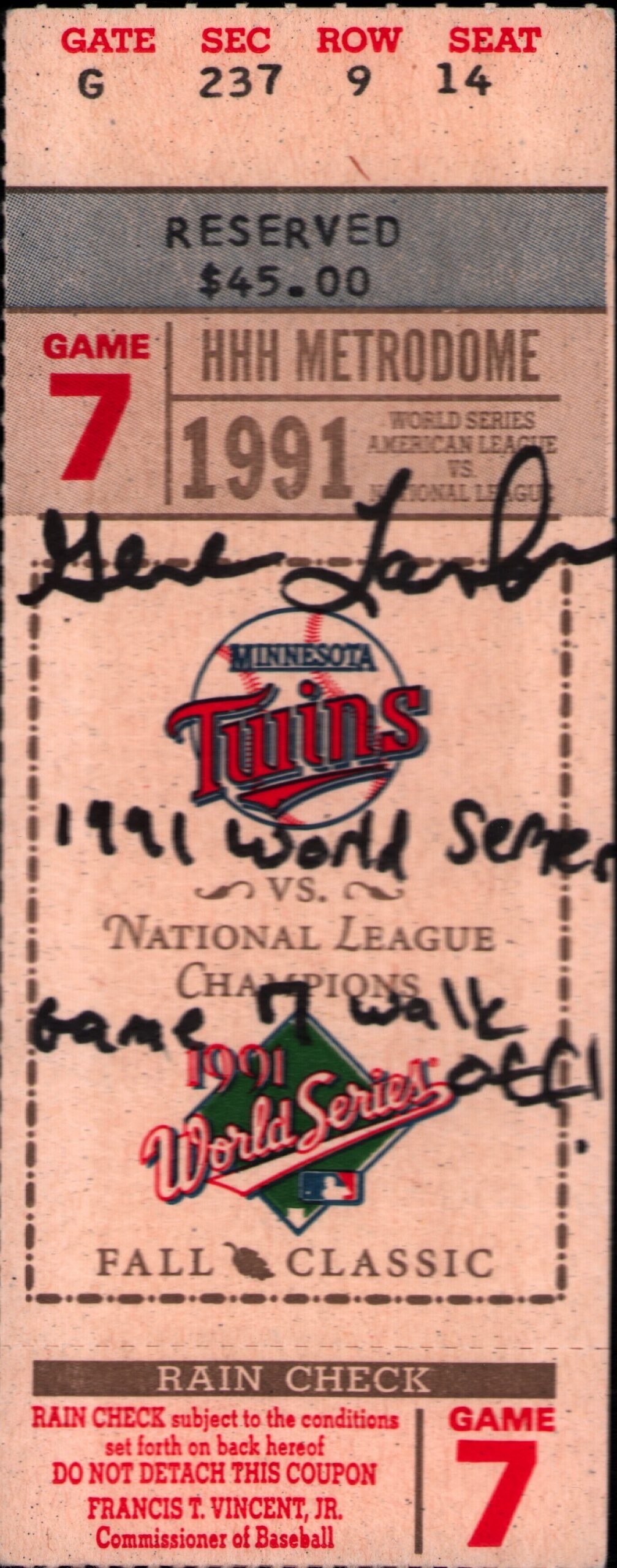
After leaving the Lions, Larkin played seven major league seasons. His most memorable baseball moment came in Game 7 of the 1991 World Series. In a 10-inning scoreless tie, he delivered a walk-off single to crown the Minnesota Twins champions of the baseball world. Columbia inducted him into its Athletics Hall of Fame in 2006.
Brett Boretti’s steady hand as head coach extends the tradition; Simpson reaches the bigs
Today, the program continues to shine and produce talent. Since 2005 Brett Boretti guides Columbia Baseball as head coach. In his first 20 seasons Boretti’s teams have reached the Ivy League playoffs 11 times, winning eight championships. The winningest coach in program history, Boretti’s teams boast 14 wins over nationally-ranked teams and seven NCAA Tournament victories. Both marks are the most in the history of Ivy League teams.
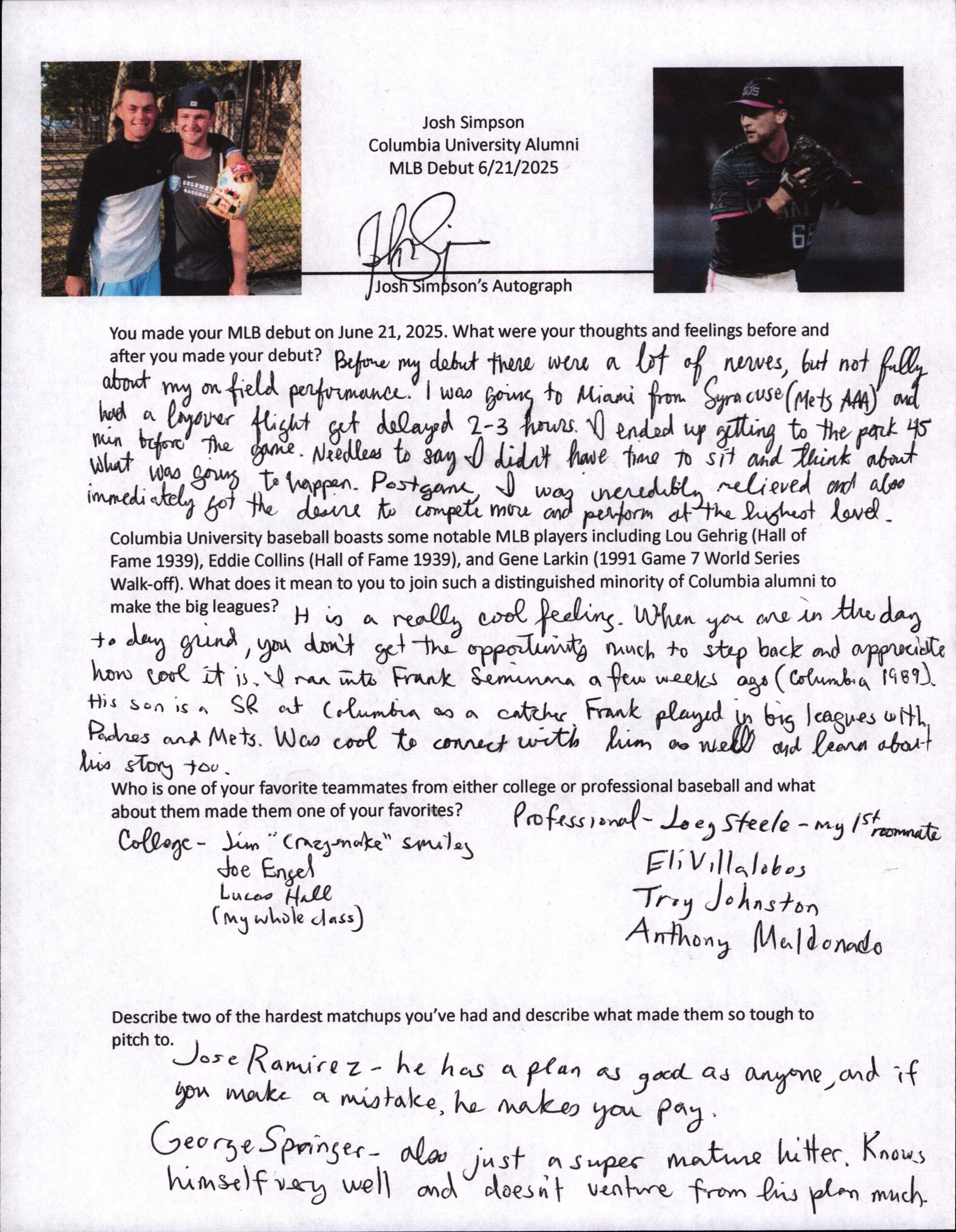
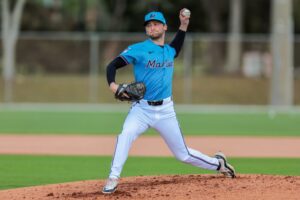
In 2019, the Marlins drafted Columbia pitcher Josh Simpson in the 32nd round. The southpaw worked his way through their minor league system, suiting up for 8 affiliates along the way. On June 21st, 2025 he became Boretti’s first big leaguer and the 23rd Columbia man to reach baseball’s highest level. In 31 games that year, Simpson posted a 4–2 record with 36 strikeouts in 31 games for the Marlins.
Columbia baseball players never shared one major league clubhouse. Instead, they shared a common origin.
Ward started the legacy. Collins set the standard. Gehrig became the legend. Larkin delivered a championship moment. Now, Simpson carries the tradition forward.
Editor’s note: The author of this story is Jimmy Smiley who played at Columbia under Coach Brett Boretti as a teammate of Josh Simpson. Jimmy can be reached at jbs2253@columbia.edu
Be sure to check out CooperstownExpert.com, the internet’s leading website for the display of museum-quality baseball autographs.