Burleigh Grimes

| Birthdate | 8/18/1893 |
| Death Date | 12/6/1985 |
| Debut Year | 1916 |
| Year of Induction | 1964 |
| Teams | Braves, Cardinals, Cubs, Dodgers, Giants, Pirates, Yankees |
| Position | Pitcher |
After banning the spitter in 1920, MLB grandfathered in 17 men allowed to throw it until retirement. Burleigh Grimes was the last legal spitballer.
Leave a commentIn the collection:

Burleigh Grimes was one of the most durable pitchers of the 1920s
Burleigh Grimes was one of the most durable pitchers of the 1920s

Burleigh Grimes reached the majors in 1916 with the Pittsburgh Pirates before finding stardom in Brooklyn. Pittsburgh traded the tough right-hander after two seasons, a move that transformed his career trajectory. Grimes immediately flourished with the Robins during his first season in Brooklyn. He paced the league with 40 starts while winning 19 games and posting a sparkling 2.16 ERA.
The durable spitballer soon developed into one of baseball’s premier workhorses during the 1920s. Grimes dominated the decade through stamina, toughness and relentless innings consumption. He led all major league pitchers in innings pitched. No hurler completed more games during the decade than Grimes’ staggering total of 234. That figure exceeded fellow Hall of Famer Grover Cleveland Alexander who was the second winningest pitcher of the decade by 40 games.
Opposing hitters rarely enjoyed facing Grimes during his peak years. His 190 victories topped all pitchers throughout the 1920s. Only his teammate of five years Dazzy Vance recorded more strikeouts during the decade.
The 1928 campaign marked Grimes’ finest individual season. He won a career-best 25 games while leading the league in starts, innings, victories, complete games and shutouts. Voters rewarded that dominant performance with a third-place finish in Most Valuable Player voting. Quite simply Burleigh Grimes was a dominant force during the decade.
The autographed 1962 Fleer baseball card shown here honors one of the defining pitchers of his era.

Though MLB outlawed the spitball in 1920, Grimes and 17 others were allowed to throw it until they retired
Though MLB outlawed the spitball in 1920, Grimes and 17 others were allowed to throw it until they retired
When Major League Baseball outlawed the spitball in February of 1920, league officials granted exceptions to 17 active pitchers. Burleigh Grimes stood among that exclusive group of grandfathered hurlers. The crafty right-hander relied heavily on the controversial pitch throughout his long and successful career.
Grimes used the spitball to frustrate hitters during one of baseball’s most competitive pitching eras. Across the 1920s, he developed into one of the game’s toughest and most durable starters. Four times during the decade, voters considered Grimes for the Most Valuable Player Award. He finished among the top five candidates twice during that impressive run.
The veteran right-hander continued throwing the outlawed pitch until retirement in 1934. Grimes spent 15 seasons legally using a pitch baseball officially banned for nearly his entire career. No pitcher remained connected to the spitball longer than the future Hall of Famer.
The contract shown here links directly to that unusual baseball history. Grimes signed the agreement with the New York Yankees on May 28, 1934. The deal guaranteed the veteran hurler $5,000 for the remainder of the season. Few contracts from that era involving Hall of Fame players survive in private collections today. This agreement carries added historical importance because Grimes stood as baseball’s final legal spitball artist when he signed it.

Grimes is known as the last man in both the NL and AL to legally throw the spitball
Grimes is known as the last man in both the NL and AL to legally throw the spitball
When Major League Baseball outlawed the spitball in 1920, league officials granted exceptions to 17 active pitchers. Burleigh Grimes benefited more than any of them. Most grandfathered spitballers faded quickly as baseball embraced a cleaner and more modern style of play. By the close of the 1920s, only four legal practitioners still remained in uniform.
Fifty-year-old Jack Quinn exited on July 7, 1933 after throwing the final pitch of his career for Cincinnati. His retirement left one legal spitballer in each league. Red Faber represented the American League while Grimes stood alone in the National League.
The Cubs released Grimes on July 30, 1933, but his career continued moving forward. St. Louis signed the veteran the following day and added another chapter to his National League journey. Meanwhile, Faber retired after the 1933 season and concluded his 20-year White Sox career. That departure left Grimes as baseball’s lone legal spitball artist.
Grimes crossed leagues in May of 1934 when the New York Yankees signed the future Cooperstown man. The move created a unique distinction in baseball history. Grimes became the final pitcher legally permitted to throw the spitball in both major leagues. He remained in New York for one month before finishing his career later that season with Pittsburgh.
The signature page shown here comes from Grimes’ 1934 Yankees contract. Yankees general manager Ed Barrow filled out the agreement and penned the date of May 28, 1934. Barrow also signed owner Jacob Ruppert’s name and added his initials beneath it. Grimes signed directly below those marks. The complete agreement also bears the signature of Hall of Fame executive William Harridge.

After leaving Brooklyn in 1927, Grimes played for 6 teams in the next 8 seasons
After leaving Brooklyn in 1927, Grimes played for 6 teams in the next 8 seasons
The final eight seasons of Burleigh Grimes’ career turned into a baseball road trip across the National League. The crafty spitballer suited up for the New York Giants, Pittsburgh Pirates, Boston Braves, St. Louis Cardinals, Chicago Cubs, and New York Yankees.
Despite the constant movement, Grimes still delivered dominant performances deep into his career. His finest late-career season arrived during his second stint with Pittsburgh in 1928. Grimes overwhelmed National League hitters and led the circuit in victories with 25. He also topped the league in games pitched with 48, complete games with 28, and innings with 330.2. Few pitchers carried heavier workloads during baseball’s rugged early decades.
Grimes reached another career milestone three years later with the St. Louis Cardinals. In 1931, the veteran right-hander finally captured his first and only World Series championship. He rose to the occasion against Connie Mack’s powerful Philadelphia Athletics and delivered two clutch victories. Grimes won in Game 3 and the deciding Game 7 to power the Cardinals toward the championship. Even near retirement, the battle-tested veteran still thrived under October pressure.
Shown here is a 1933 Goudey baseball card featuring Grimes in a Chicago Cubs uniform. Baseball’s last legal spitballer personally signed the treasured collectible.
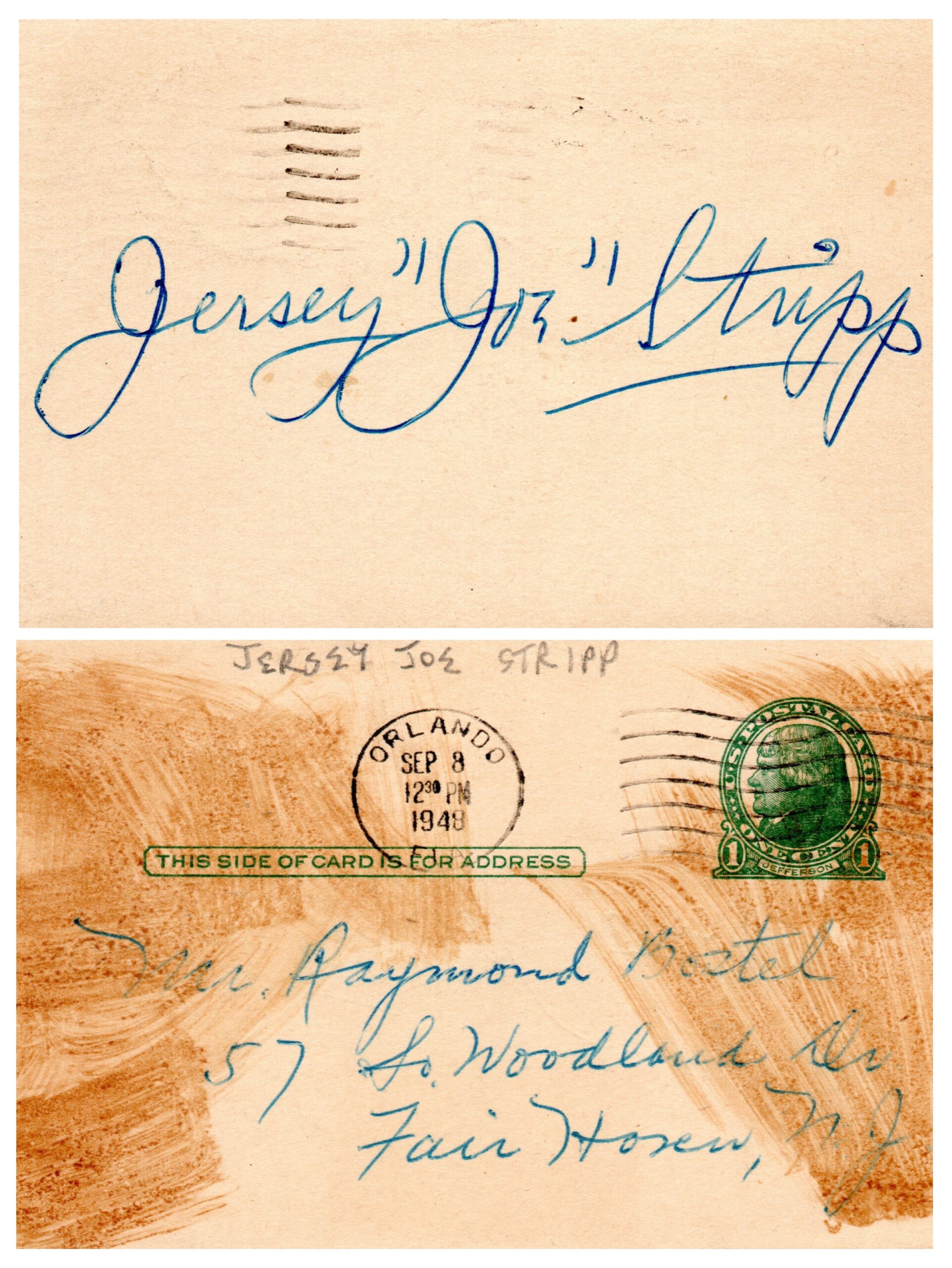
Grimes legally threw the spitball for 15 years after it was banned; the last man to face him was Joe Stripp
Grimes legally threw the spitball for 15 years after it was banned; the last man to face him was Joe Stripp
After baseball banned the spitball for safety reasons in 1920, league officials grandfathered active pitchers who threw it into legality. Burleigh Grimes ranked among that select group. At the time, the 26-year-old right-hander owned a modest 34-39 career record and little hint of future Cooperstown glory.
Everything changed once Grimes settled into his role as baseball’s premier legal spitball artist. Armed with the outlawed pitch, he carved through hitters for another 15 seasons. During that stretch, Grimes posted an outstanding 236-173 record and developed into one of baseball’s toughest workhorses. His durability and deception helped define an entire pitching era.
The final chapter arrived on September 20, 1934 at Ebbets Field. Grimes entered in relief during the eighth inning with Pittsburgh trailing Brooklyn 2-1. First, he retired Tony Cuccinello on a fly ball to center field. Next came a groundout from Johnny Frederick.
Then the moment arrived that permanently linked Grimes to baseball history. Brooklyn third baseman Jersey Joe Stripp stepped into the batter’s box against the aging spitballer. Grimes finished the inning emphatically by striking out the 31-year-old Dodger. That pitch marked the final legal spitball ever thrown in the major leagues.
Shown here is Stipp’s signature on a government postcard. On one side is his signature. The other features a postmark of September 8, 1949 from Orlando Florida. Stripp retired after the 1938 season and retired to Florida. His signature is by no means rare though examples from this long ago remain desireable.
After firing Casey Stengel as manager in 1936 Brooklyn gave the reins to Grimes
After firing Casey Stengel as manager in 1936 Brooklyn gave the reins to Grimes
Burleigh Grimes wasted little time finding baseball work after ending his playing career in 1934. The Hall of Fame pitcher immediately shifted from the mound toward the dugout.
St. Louis handed Grimes the managerial job at Bloomington, Illinois, within the Cardinals’ farm system. He quickly proved his leadership skills and guided the club to the 1935 league championship. That impressive season boosted Grimes’ reputation throughout the Cardinals organization and opened another opportunity.
Soon afterward, St. Louis promoted Grimes to Louisville, the top affiliate in the powerful American Association. The Colonels struggled during the 1936 campaign and finished seventh under his direction.
Despite the disappointing record, Grimes still attracted attention from the major leagues. Brooklyn searched for a replacement after firing colorful manager Casey Stengel in October 1936. Dodgers executives turned toward Grimes and offered him the vacant managerial position. He accepted the challenge and stepped into one of baseball’s toughest jobs.
Grimes managed Brooklyn for two seasons and battled through difficult circumstances with the struggling franchise. His clubs posted a combined 131-171 record during his brief major league managerial career. Although victories proved difficult to secure, Grimes brought toughness and baseball credibility into the Dodgers clubhouse. Players respected the fiery former spitballer who spent decades battling hitters across the National League.
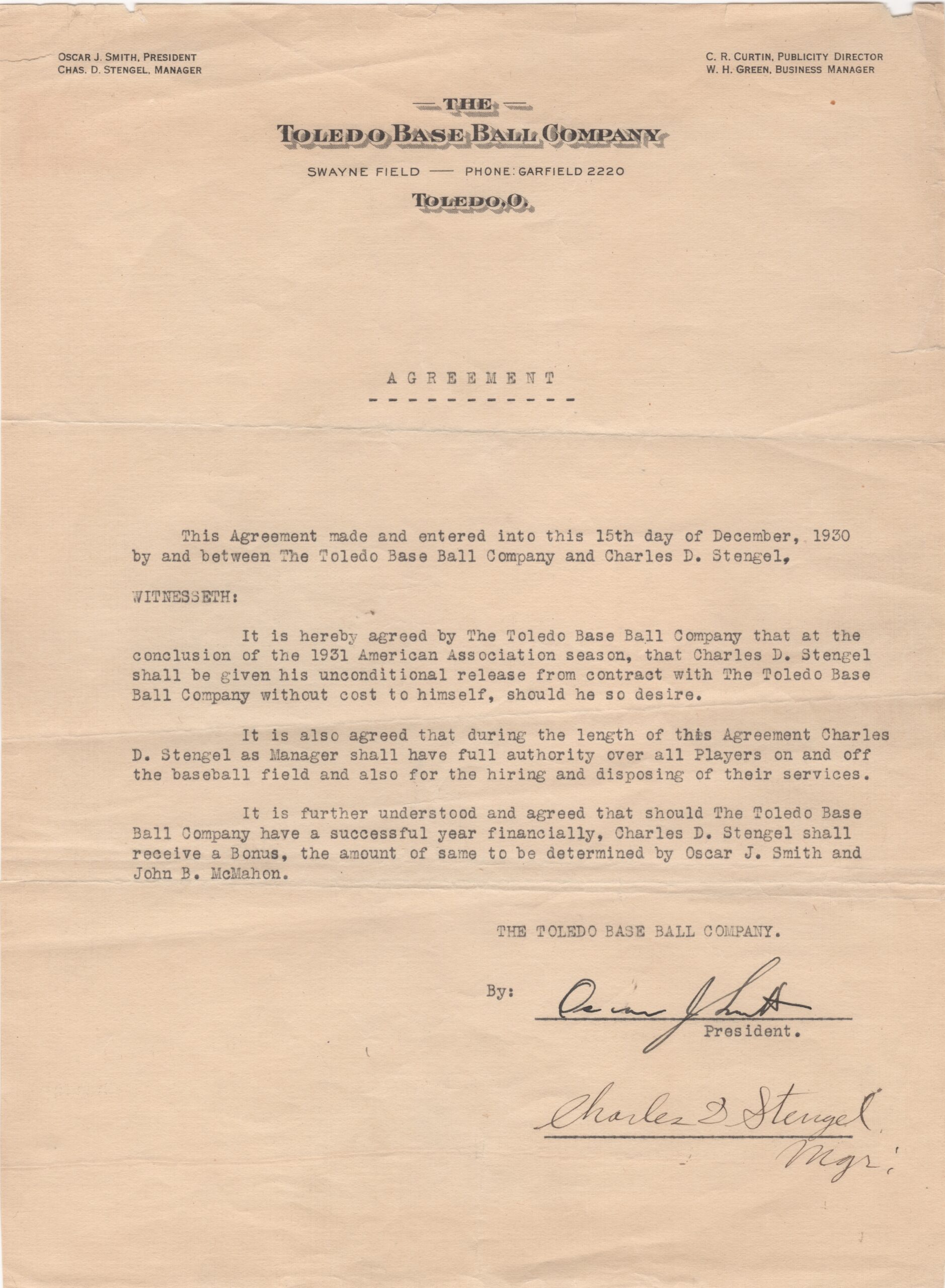
Shown here is a contract signed by Gimes’ predecessor as Brooklyn manager, Casey Stengel. The Hall of Fame skipper agrees to manage the Toledo Mud Hens in 1930.

Grimes received the call to Cooperstown along with six others in 1964
Grimes received the call to Cooperstown along with six others in 1964
Burleigh Grimes reached baseball immortality in 1964 when Cooperstown elected him to the Hall of Fame. The Baseball Writers’ Association of America also selected Red Faber, Heinie Manush and Luke Appling that summer. Meanwhile, the Veterans Committee honored Miller Huggins, Tim Keefe and John Montgomery Ward posthumously.
Faber spent his entire 20-year career with the White Sox and mastered the spitball better than nearly anyone. He won 254 games and anchored Chicago’s 1917 and 1919 pennant-winning clubs.
Manush built his Cooperstown résumé with line drives and batting titles. The sweet-swinging outfielder collected more than 2,500 hits and captured the 1926 American League batting crown.
Appling earned the nickname “Old Aches and Pains” yet rarely missed time. The longtime White Sox captain retired with 2,749 hits and two batting titles.
Huggins guided the Yankees dynasty of the 1920s and helped mold baseball’s greatest powerhouse. His clubs won six American League pennants and three World Series titles.
Keefe dominated 19th-century hitters with pinpoint control and staggering workloads. The right-hander finished with 342 victories and ranked among baseball’s earliest pitching legends.
Ward excelled as both a player and organizer during baseball’s formative years. He later founded the Brotherhood of Professional Base Ball Players, the sport’s first players’ union.
The piece shown here features a 1933 Goudey baseball card signed by Faber during his final major league season at age 44, decades before he joined Grimes in Cooperstown’s Class of 1964.
Burleigh Grimes was inducted into the Birmingham Barons Hall of Fame in 2008
Burleigh Grimes was inducted into the Birmingham Barons Hall of Fame in 2008
Among the many accolades Burleigh Grimes earned is induction into the Birmingham Barons Hall of Fame in 2008. He was one of four who earned the distinction that year. The others included Rubin E. Grant, and Cooperstown men Rollie Fingers, and Leroy “Satchel” Paige.
The Barons Hall describes Burleigh on its website, “In 1914, Grimes helped the Barons to their third Southern Association title and paced the 1915 team with 158 strikeouts. The 1916 season marked his most-prominent as a Baron as he led the team to wins (20), games (40), and innings pitched (276). Grimes earned selection to the National Baseball Hall of Fame in 1964.”
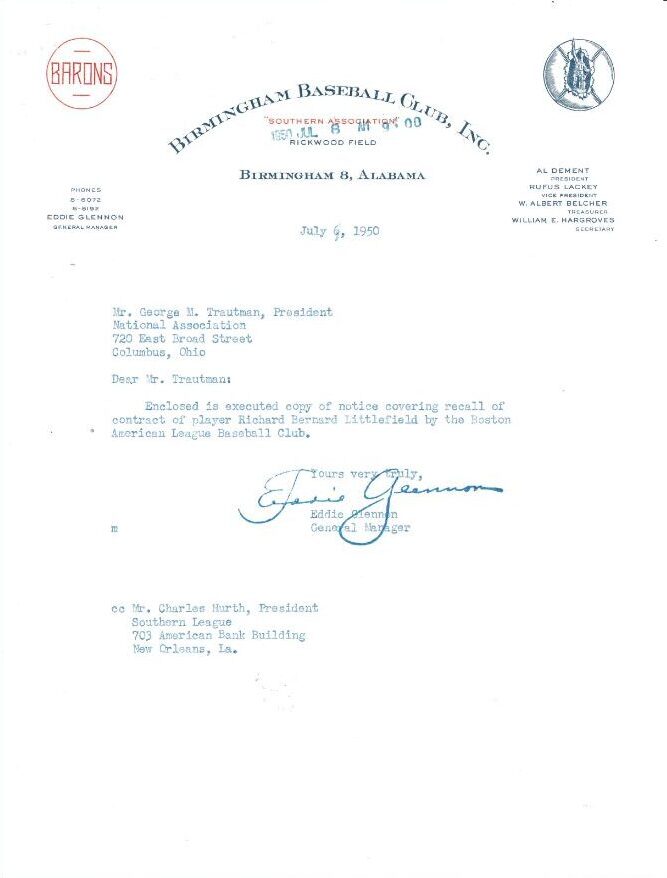
Shown here is a correspondence on ornate Birmingham letterhead. Dated July 6, 1950, it is signed by Eddie Glennon, Birmingham Barons Hall of Fame class of 2010. The letter is to George Trautman, the president of the National Association.
Glennon writes of the recall of Dick Littlefield for his big league debut. Littlefield is best remembered as the pitcher the Giants traded to the Dodgers for Jackie Robinson on December 13, 1956. Rather than report to his rival team, Robinson retired from the game.


